
Review | Psycho-Sleuth - Please Just Go Play Danganronpa I’m Begging You
One thing about me is that I’m a total mystery game sicko. I’ve played most major entries in the genre, and plenty of more obscure ones as well. The easiest way to guarantee my eyes on your project is to give me a case to solve, a cast to suspect, and maybe even a moral dilemma or several. I love Zero Escape, I love Paradise Killer, I love Murder by Numbers, I love Judgment — and, most important to this review, I love Danganronpa, everybody’s favourite irreverent killing game franchise.
Psycho-Sleuth, Taiwanese game developer PHOSEPO’s newest romp, follows the Dangan playbook to a fault. Thirteen people from all walks of life are summoned to the Selection, an event run by the rapidly-expanding religion/cult of the Logic Church that promises to turn its victor into a god, shaping the world to their liking, regardless of how impossible their requests sound.
The twist? All of the candidates have a superpower (Pathosync), related to their cognitive disorders, and they must engage in Werewolf-style mutual killings. Every round, the chosen Wolf is allowed to kill only one person, and, the deed being done, the rest of the group must suss the culprit out. This basis should be already deeply familiar to those of us that have met with Monokuma in the past.
To spice things up, hidden roles are slowly added into the mix as the story proceeds, such as the Heroes, who have to agree to execute (“purify”) the killer once they’re revealed, and the Seer, who gets to know the Wolf’s identity, but can only subtly steer the discussion. Once found out, the Wolf is purified in a manner that reflects their own cognitive disorder; for example, someone with hemispatial neglect would be bisected.
The premise may immediately strike the audience as flirting very closely with ableism, yes — but that was the very reason why I was drawn to it. Mystery stories adore demonising mental conditions for drama (several included in Psycho-Sleuth can also be seen across beloved scenario writer Kotaro Uchikoshi’s work, for one), and when one proposes to include that controversial feature so brazenly, I’m in, whether on the off chance it may actually be good about it or to see just how bad it’ll get.
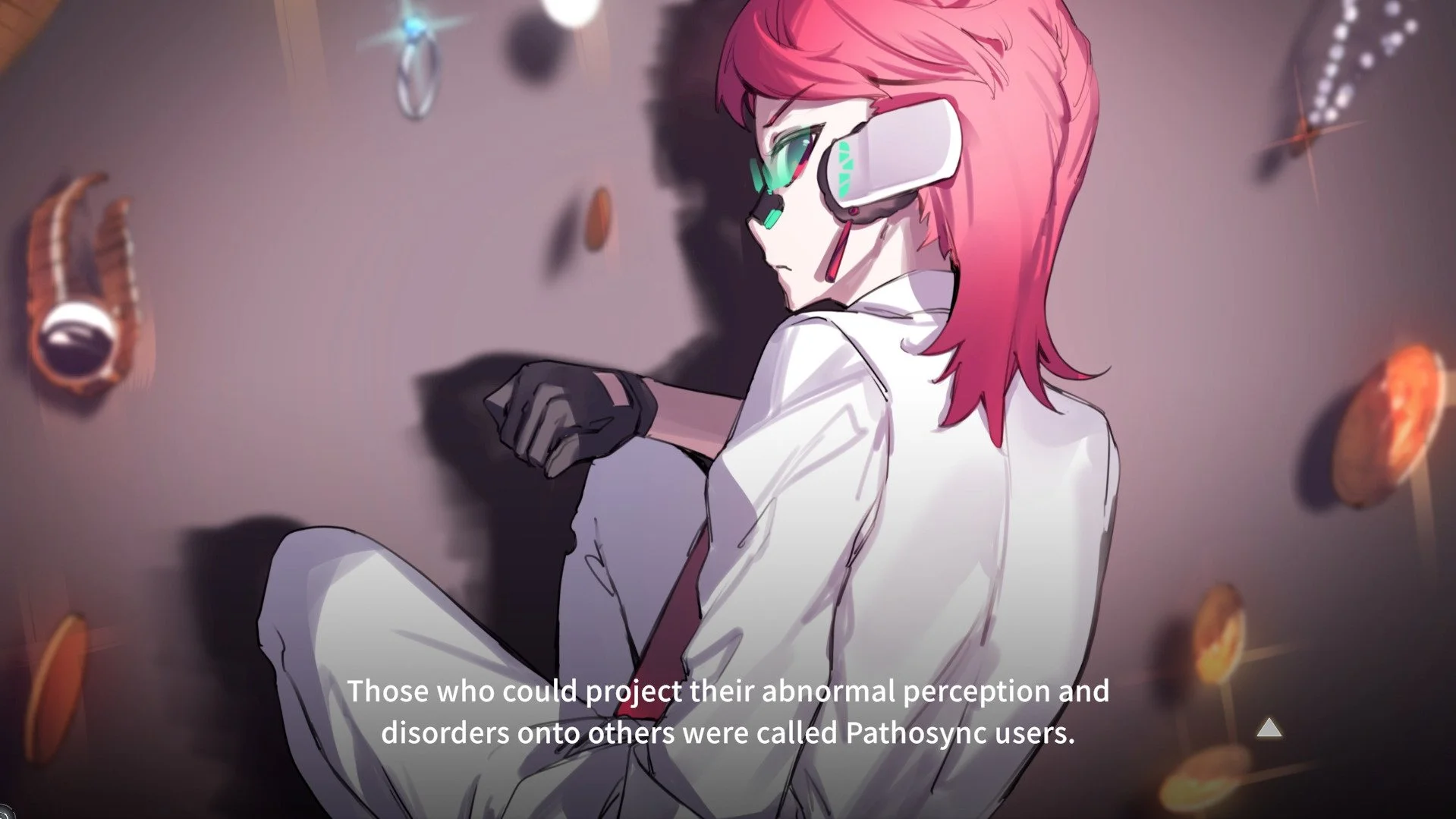
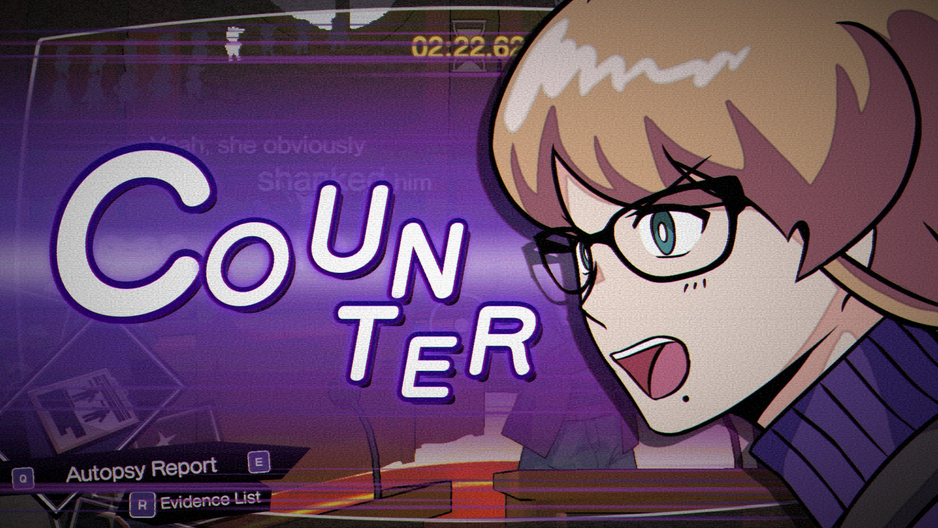
It also doesn’t hurt that the game just looks good. While the character design is a little hit-or-miss, and protagonist Lyle is pretty much a TEMU Kusuo Saiki with a dumb nose band-aid, the art direction is very eye-catching. This is especially seen during the “Case Summary” segments after each murder, which crib from Danganronpa’s Closing Arguments and their moving comics/case explainers, as well as the fully animated executions (admittedly, much more boring than the ones in the model they’re emulating). Backhanded compliments aside, this style’s got the sauce, and the soundtrack frames it quite well, too.
This is also the part where I reveal to you, for transparency’s sake, that Psycho-Sleuth employed generative AI during production. The developers claim it was used for proofreading human-made translations and generating concept art “during internal communication”; according to them, no genAI “art” is featured in the final release. These facts were only disclosed after the game was already out, and discovered by me after 15 hours of playtime.
All things considered, it’s not the worst case of slop-machine surrender. They’re certainly not out there acting like Level-5. It does, however, act as something of a cherry on top for me, because Psycho-Sleuth is one of the worst games I’ve ever had the displeasure of playing. If it was revealed an LLM was also used to outline the story and provide feedback, I wouldn’t be surprised. People, it is so bad.
To start, the elephant in the room: the portrayal of mental illness. I’ll tell you upfront that it’s not the world-ending disaster I was bracing myself for, and the narrative seems generally sympathetic towards disabled people (the more venomous takes, such as “death is preferable to disability”, are reserved for the villains, who are obviously portrayed as wrong), but it’s not very good either.
The conditions featured here are extremely fictionalised, to the point of misrepresentation: for example, Body Integrity Identity Disorder (BIID), essentially a form of dysphoria that makes the afflicted feel an urge to do disabling harm to their body, is portrayed as a disorder that instead has one seeing all limbs as disgusting masses of flesh, and the wielder of that Pathosync makes everyone around them share this perception. This wielder also happens to be a serial killer that slowly dismembers their victims.
PHOSEPO clearly realises that sounds bad, because the game includes a baffling attempt to lionise this character. To keep spoilers to a minimum, it’s something that makes their whole murder trick into a show of absolute hypocrisy that is never addressed by the narrative — and let me tell you, addressing things is something this developer loves to do. It is extremely rare I get a chance to interpret anything that’s going on for myself, because the next huge problem in Psycho-Sleuth is that it is obsessed with itself.
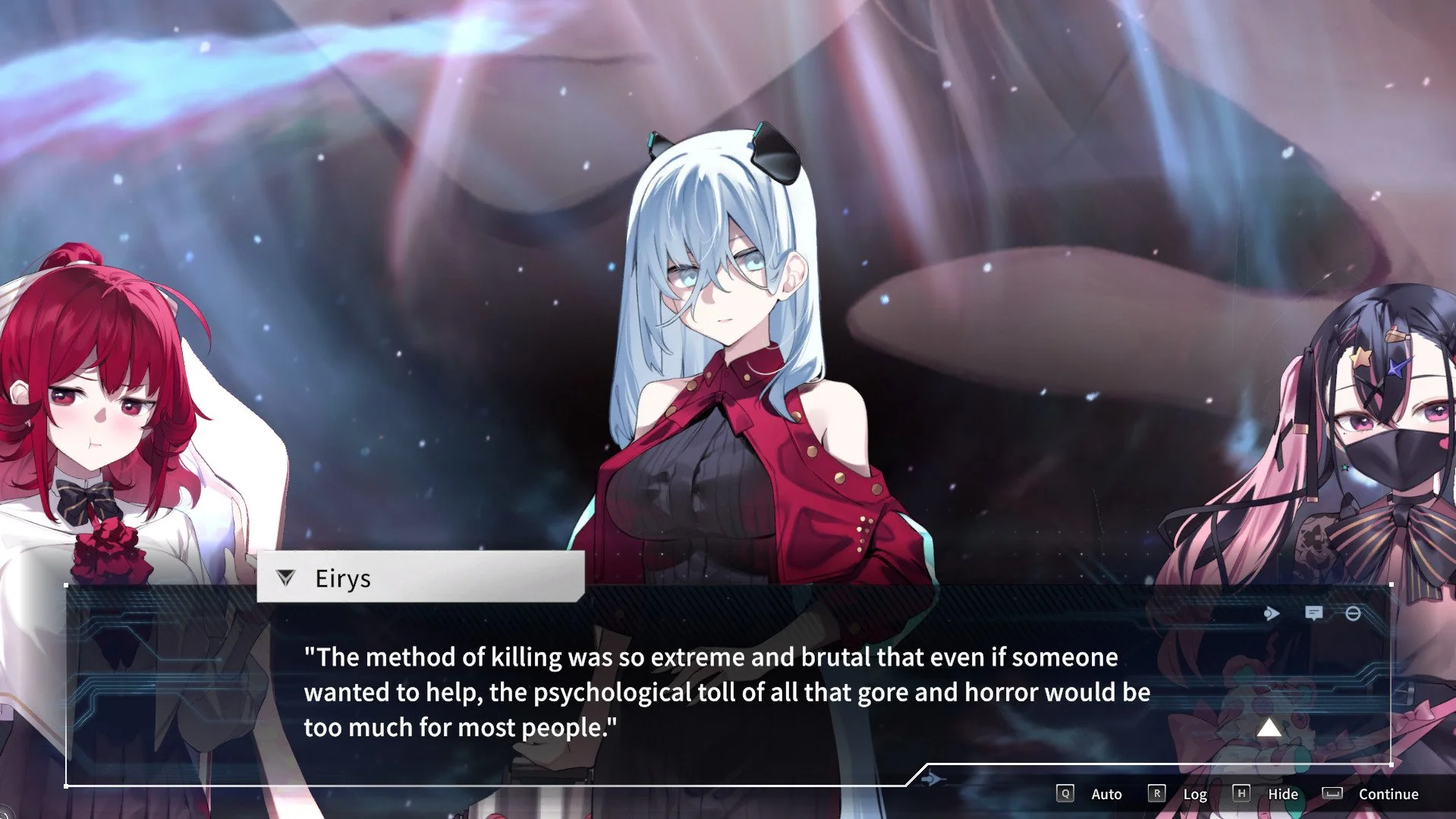
Every time a murder is committed, way too much of each trial is dedicated to having the characters ooh and aah about how grisly it is, how genius it is, how the killer is such a sick and twisted individual for it. Every time a sad backstory is unveiled, Lyle’s inner monologue, despite his outward insistence on acting prickly and selfish, makes a note of how utterly heartbreaking it is. When someone expresses their feelings, he is quick to explain to us exactly why they feel like that. It’s like the narrative is scared of the idea of being interpreted.
Information is also revealed at the drop of a hat, often to the disadvantage of the mysteries at hand. I have a list of cognitive disorders I can reference for everyone who didn’t reveal theirs immediately, and the naming conventions are so patently obvious it doesn’t take that long to realise Alice is the one with Alice in Wonderland Syndrome. I don’t get to wonder about characters’ motivations, because the game loves to show me extra scenes the protagonist isn’t aware of.
This narrative is in love with itself, and in its every move it attempts to steer the audience to feel the same, give us the same bird’s-eye view the writers have, beg us to praise the marvelous world that’s being constructed — and I might have taken it up on it if it wasn’t this transparently pathetic. It reeks of a lack of confidence that may very well be deserved, because the mystery writing, the core of a narrative like Psycho-Sleuth’s, is just awful.
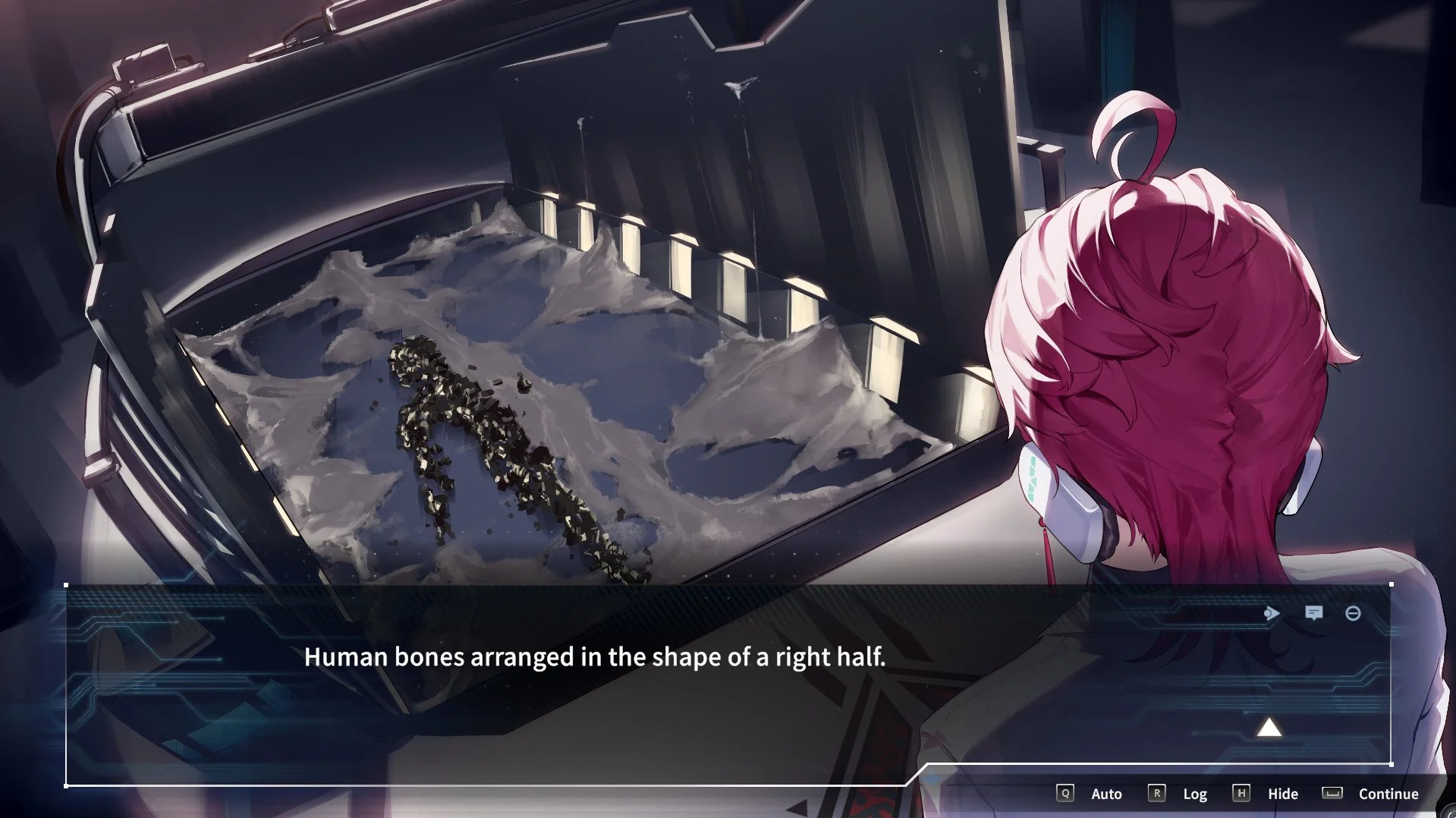
Cases often hinge on ignoring several pieces of evidence, creating “genius” scenarios that would be impossible even accounting for the superpowers being used, or just being plain dumb. It doesn’t help that the gameplay has zero variety. Danganronpa asked me to go surfing inside my mind to connect two and two. Kumitantei: Old-School Slaughter, another recent release that took attentive notes from Kazutaka Kodaka’s work, has me playing card battles and cute ‘80s arcade homages. Psycho-Sleuth has nothing in the tank. It pilfered a grand total of four elements from Danganronpa — the debate where individual sentences must be countered, the simple (too simple, here) multiple-choice deductions, the selection of suspicious spots in a crime scene, and the aforementioned end-of-case comics — and that’s it. As you can imagine, the lack of variety makes cases extremely boring.
I also just still haven’t wrapped my head around any solid use case for the Seer. You get to know who the Werewolf is, but you can’t tell anyone directly nor even hint at the culprit’s identity, plus everyone knows who the Seer is so no one can fake a claim and misdirect the trial — the red tape is endless! Why on Earth is everyone in the cast acting like this role is all-powerful?! This is just being under NDA with extra steps!
Finally, I must get to the heart of where Psycho-Sleuth fails. It’s simple: above it all, above the boring characters and cases and gameplay, above any other measure of good or bad writing, this game is just not funny.
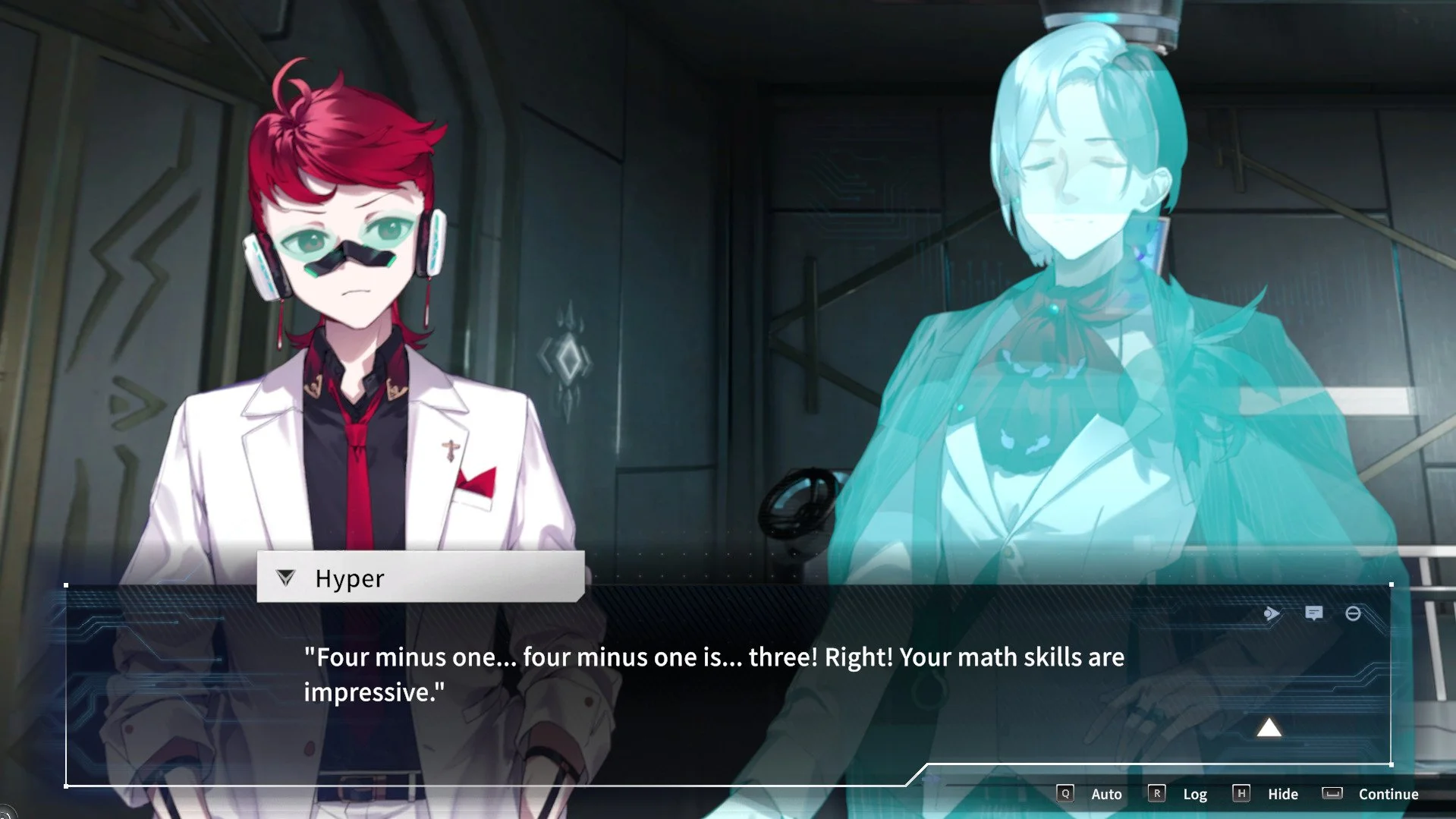
It tries. It tries a lot. It tries the manzai routines (and here I thought Master Detective Archives: Rain Code’s heinous protagonists were the worst to ever do it, but Hyper and Elian, especially that little jerk Elian oh God I hate Elian so much, seem determined to prove me wrong). It tries the cheeky otaku culture references. It tries mocking the “dumb” characters of the ensemble, and that falls flat when the writing itself isn’t smart enough to talk from any place of privilege. It tries, most out of anything, that thing that makes so many visual novel fans roll over laughing upon being brought up: incest.
My friends, there’s so many goddamn incest jokes in here. The protagonist’s sister literally has a sprite where she wears a hairband that says “onii-chan” and holds fans with his face. She makes constant references to wanting to marry him. I really can’t tell how much he’s into it, but it doesn’t matter, because it’s not narratively interesting incest, it’s just “funny” incest. It just forgot the part where it has to be funny. That won’t stop it from trying to convince me — as many times as it takes.
Repetition is truly the heart of the matter when it comes to this game. It’s in the cases, the jokes, the character traits, the attempted reassurances that you’re currently reading Peak Fiction TM, and the more everything has to be said, the less compelled I am. It’s bad writing to refer to a single point of reference over and over again (though it’s kind of on brand), but with how much this wants to be Danganronpa, I must say I found new respect for Kodaka’s work. When you’re this inept at doing what he does, you very clearly expose what made your inspirations work so well.
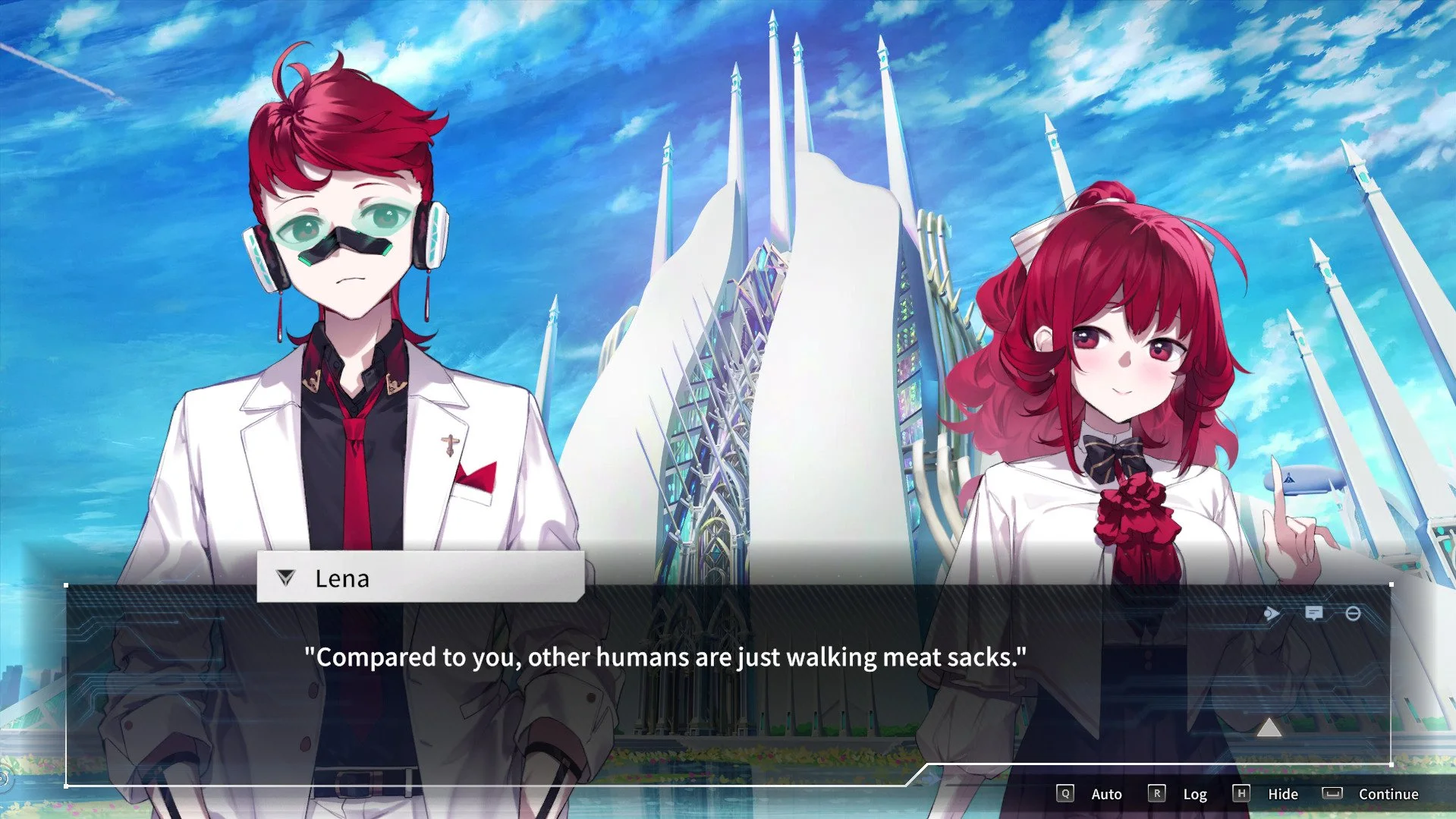
Psycho-Sleuth is one of the worst games I have ever played. Its only place in my personal mystery game canon is, as illustrated, to be a ruler by which to judge other works. Are you this boring, this patronising, yet somehow this self-obsessed despite having nothing to offer? If so, you might be getting close to the bottom of the barrel in the genre. Go join the Logic Church down there.
Psycho-Sleuth was played on PC using a code provided by the publisher.